Thursday, February 28, 2019

Preserve the Baltimore Uprising Internship Blog #1


My name is George Lewis and I am a second-year Historical Studies graduate student at UMBC. This semester I am interning with Dr. Meringolo on the Preserve the Baltimore Uprising Project. The goal of this project is to to preserve and disseminate oral histories surrounding the Baltimore Uprising events of 2015. The events that transpired after the death of Freddie Gray in April of that year made national headlines. Many citizens of Baltimore City who observed and participated in the protest, demonstrations, and other activities associated with the uprising longed to preserve their accounts of the event and its aftermath. Dr. Meringolo began this project this past fall (2018) by reaching out to several local Baltimore city high schools. The goal was to work with 3 to 4 local city schools. In the end the project went forward working with 2 local schools: Baltimore Polytechnic High School and City College High School.

 Dr. Meringolo reached out to these two schools to conduct an oral history project with the high school students. The students were tasked with completing formal oral history training and developing interview questions. Armed with their new-found knowledge on oral histories and persevered memory the students headed out into the community to interview people who witnessed any aspect of the events following the death of Freddie Gray. These interviews and following projects the student create from them are the focus of the showcase in April 10th, 2019 at the Maryland Historical Society The goal of this showcase is to celebrate the efforts and achievements of these students and the numerous community members who took part, not only in the current project, but the previous on-going task of preserving the Baltimore Uprising. Along with the students work there will be presentation by Danielle Drakes, a screening of a documentary by Lee Boot. This event is open to the public.

As a history graduate student and a teacher for Baltimore County Public Schools, my involvement with this project consists of creating usable classroom lessons for teacher of local, state and even national school to implement. Along with the lessons I will be creating, the interns this semester are tasked with helping with the showcase in April. My goal throughout this internship is to create a series of lesson plans utilizable in the classroom setting. Pat Brynes, another high school teacher in the Carroll county area, will work with me to develop a comprehensive set of lessons for Social Studies teachers at various levels. Incorporating the Maryland Common Core State Standards (CCSS) for high school students, these lessons will teach the principles of oral history. By teaching students what oral history is, as well as its importance to the historical record, these lessons will enable students to conduct and analyze interviews independently. The students will also understand the efforts put forth in conducting a proper interview.

Pat and I are currently unsure of how many lesson plans we will create, or they would constitute an entire unit plan. Currently, we are modeling our initial ideas from Park City Museum and their Oral History Step by Step Guide found at http://dohistory.org/on_your_own/toolkit/oralHistory.html. Also included in this plan are several online examples from educational institutions such as the Rutgers Oral History Archive, the American Memory program at the Library of Congress, and oral history collections from the Archives of American Art.

In this stage of development, the lessons will be designed with high school students in mind. Our goal is for them to be adaptable for middle school use. Keeping in mind that both Pat and I are high school social studies teachers and that the initial project started with high school students it only seems fitting to plan the lessons accordingly. By breaking the project into five manageable parts, students will learn to do the following:

1. Students will be able to learn what oral history is and consist of.
2. Students will be able to examine the significance of oral history to creating and preserving historical record.
3. Students will be able to pinpoint a specific event to study through the lens of oral history
4. Students will be able to conduct oral history interviews using questions they've developed
5. Students will be able to analyze and reflect on their process, including potential errors made during the process

We would like, if time and resources allows, to create some lessons revolving around the events of the Baltimore Uprising. Perserve the Baltimore Uprising 2015 (baltimoreuprising2015.org) has done a tremendous job of gathering materials on the events and is a crucial partner in the initial project head by Mr. Meringolo. A set of lessons detailing the events from both a media and community perspective/narrative would be highly educational and influential.

Tuesday, February 26, 2019

UMBC Special Collections Internship #1

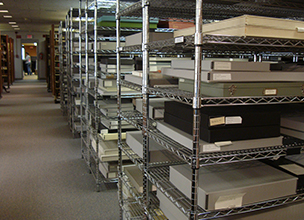
Hi my name is Jeanette Richardson and I'm a junior undergraduate History major with a Public History minor. This semester I am doing an internship at UMBC'S Special Collections/Archive. I started at the end of January and have been acquainting myself with the Past Perfect database and search engine UMBC uses for its collection. My main project is to create tutorials for other students, faculty, and the general public to view in order to learn and understand how they themselves can search the collection. To someone unfamiliar, or even someone with some experience, the search engine in Special Collections can be tricky to navigate. I am also learning how to use the screen cast software Panopto which I will use to film and edit my tutorial. I have done research in Past Perfect and first am focusing on creating a tutorial for the photo collections. Since I have a lot of experience with Civil War history I am using the collection's vast Civil War collection for my example. I have had to write a script and storyboard my project and have it edited and approved by my supervisor. I have so far finished my second draft on this first tutorial project, after more edits and approval I will film and edit the video. The video will then be uploaded to the UMBC Library YouTube channel and library website. I also have plans to make more tutorials including using and navigating a finding aid, which will involve some mild coding, and conducting archival searches. I have also done many readings about archives and how they function, how researchers use them, and how information can be organized. I also will be learning more functions of an academic library and the role of archives and special collections.

Image result for umbc special collections

Wednesday, February 20, 2019

Preserve the Baltimore Uprising Internship Blog #1

My name is Pat Brynes, a second-year graduate student at UMBC. This semester, my internship is with Dr. Denise Meringolo, working to preserve and disseminate oral histories surrounding the Baltimore Uprising events of 2015. Following the death of Freddie Gray in April 2015, several observers and participants longed to preserve their accounts of the event and its aftermath. My involvement with this project revolves around the creation of lesson plans and resources usable to classroom teachers.

 Beginning in the fall of 2018, Dr. Meringolo connected with Baltimore Polytechnic High School and City College High School to develop interview questions with a dedicated group of high school students. Furthermore, these students completed formal oral history training to take their efforts out into the community. From there, they will collect and preserve oral histories from community members who can personally attest to the events of Freddie Gray's death and those that followed. Collecting these oral histories throughout January and February 2019, the students will participate at a public event hosted by the Maryland Historical Society on April 10th. This event will celebrate the efforts of these students and other community members while showcasing the project as it comes to fruition. The evening's program will include the screening of Lee Boot's documentary of the program's efforts, a presentation by Danielle Drakes, as well as a formal exhibition of the oral histories preserved by the high school students.

As a high school teacher, my goal throughout this internship is to create a series of lesson plans utilizable in the classroom setting. George Lewis, another high school teacher in the Baltimore area, will work with me to develop a comprehensive set of lessons for Social Studies teachers at various levels. Incorporating the Maryland Common Core State Standards (CCSS) for high school students, these lessons will teach the principles of oral history. By teaching students what oral history actually is, as well as its importance to the historical record, these lessons will enable students to conduct and analyze interviews independently.

I am currently unsure of how many lesson plans will account for this series, or if it will even be large enough to constitute a unit plan. Currently, I'm modeling my initial ideas off of Park City Museum and their Oral History Step by Step Guide found at http://dohistory.org/on_your_own/toolkit/oralHistory.html.
Also included in this plan are several online examples from educational institutions such as the Rutgers Oral History Archive, the American Memory program at the Library of Congress, and oral history collections from the Archives of American Art.

In this stage of development, I am also not certain of the appropriate grade level for these oral history lessons. In my research of other online examples, it appears that these lessons can be modified to fit any grade level, from elementary to high school students. Nevertheless, the modifications required to fit these lessons into any classroom will not change the process. By breaking the project into four-to-five manageable parts, students will learn to do the following:

1. Students will learn what oral history actually is
2. Students will examine the significance of oral history to the historical record
3. Students will pinpoint a specific event to study through the lens of oral history
4. Students will conduct oral history interviews using questions they've developed
5. Students will analyze and reflect on their process, including potential errors made during the process.

Friday, January 11, 2019

Maryland State Archives Internship Part3


The last bit of my internship with the Legacy of Slavery in Maryland program at the Maryland State Archives continued my work in refining their public facing content, researching victims, and writing new content for their website. Additionally, I was tasked with researching Henry Davis (lynched in 1906) exhaustively. Some representatives from the state government and offices of former Governor O’Malley wanted to highlight the history of Anne Arundel, including Henry Davis’ lynching in Annapolis. Hopes were high that there would be some state documentation or record of the incident because the governor back in 1907 took particular outrage with Davis’ lynching. I tore through a number of sources at both the county and state level. Unfortunately, the perpetrators of this crime were never brought to justice and based on the absence of any records from the grand jury assigned to investigating the matter it appears the governor’s wishes for charges were ignored. This last period also saw me contesting a few lynching reports that we had been given by the University of Washington. A few instances turned out to not actually have taken place in Maryland or had little to no evidence to support placing them on the website. Compared to the start of my internship, this last third was not the flood putting content out the first few months were. We had to go name-by-name and edit/check the work of other volunteers and interns up to this point to ensure we were putting out a consistent product.

Overall this project highlighted the frustrations of researching lynchings. Whether it’s the juries not pursuing the lynch mob or families not being safe to return and identify the bodies, a number of circumstances ensured that these incidents are not recorded in an “official” manner which makes extracting these stories all the more difficult. I think that also shows why the work done at the Legacy of Slavery in Maryland program is massively important. Without a concentrated effort to uncover these bits of information then a lot of these victims would go forgotten. Similar to the barebones question of did something happen or not, we also had to contend with “did these long passed down stories actually happen here? Or were they passed down as families moved across the country?” I think that is where the interdisciplinary and community of researchers across the country come in handy.

In addition to the skills in writing, researching, and dreamweaver that I picked up over the course of my internship, I have also acquired a deep respect for the employees of the Maryland State Archives. I had the opportunity to partake in database creation, adding new material to the archives, researching both archived materials and newspapers, as well as constructing a good deal of public facing online content. Still, I only got a taste for the sort of research and organization involved in archive operation during my time with them, but it was overall fascinating. I look forward to continuing to volunteer with the Legacy of Slavery in Maryland program long after this internship has ended.

Thursday, December 20, 2018

To Edit or Not to Edit; Birds the Word Podcast Blog #3


To Edit or Not to Edit; That is the Question; Birds the Word Blog Post #3
Going into this internship I thought making a podcast was going to be a breeze, all you need is a microphone and a computer, right?  Well that’s only part of the story.  You need to decide where your going to host your podcast, do you put it up on iTunes? Spotify? Stitcher?  Does your podcast get a website?  Are you going to pay for a software to help edit the show or just release it into the wild after you finish recording?  Technologically speaking, all you need is a microphone and a computer, but if you really want the show to do well and sound good there is a lot more too that. 
               Looking beyond the technology, there is also your content.  How do you decide what your show is going to be about?  Who are you going to have on the show?  Once you figure out who you want, how are you going to get them?  Do your guests have any restrictions, or things they can’t/won’t talk about on the record?  Because remember, your podcast is on the record for all to hear.  I ran into this issue a couple times during the recording of my first season.  One of my guests, a team official who was an intern like myself but whose job put him in constant contact with Major League Scouts, the people who decide the fate of the careers of the players I was reporting on.  One of the segments we did on every show was highlighting our three stars of the week and explaining how and why we chose them.  Because of this persons relationship with MLB scouts, he declined to be part of this segment saying that if he did the segment and said something that would be part of the players official record that MLB teams would look at, and may potentially have an impact on their futures.  I can’t blame him for not wanting to take part in this segment, the impact of what I said on the show was something that weighed on me as well and I tried to stay away from making negative comments on the record just for that reason. 
               This gets to the other thing about recording a show that no one tells you.  Unless your show is live on the radio, there will come a time when you have to decide how to edit the show, and if you want to edit something someone on the show said.  This happened to be two main times during the first season of the show, once early in the year, and once during the recording of the last show.  The first time was when a guest I brought on went off the handle and started insulting one of the other teams in the league.  This team was not performing well at all at the time and off the record had been the butt of many a joke, but its one thing to say this in the relative privacy of the press box and quite another to saying on a show that reached all corners of what is really a small community.  The second incident also had to do with another guest on the show.  Between the interns there is always talk about who isn’t putting in the work, who is doing this or that, or who is just an insufferable person to be around.  This isn’t unique to the intern experience, but when the entire staff are college aged interns this conversation can come up a lot.  This guest that came on the show went on the record saying some of these things that we had said in private, and the decision came down to me and my judgement to edit what I was hearing after the show had finished recording.  After consulting with the guest, we edited that part out and deleted that part of the tape. 
               All in all, recording and producing this show was a wonderful opportunity to learn and grow in the medium.  It provided me hands on experience in podcasting and journalism, and I am now much better able to communicate my thoughts and tell stories.  Now that I have some experience I can go back to the drawing board and revamp the show so it tells more historical stories in addition to the story of the team on the field that year.  Like everything in life podcasting takes practice, and now that I have one season under my belt, and a “contract” of sorts to bring the show back for several more years, I have everything I need to continue to build the show, its community, and make sure it and myself keep growing well into the future.

Wednesday, December 19, 2018

End of Semester thoughts: Digital Internship at the VA


Jennifer here, back to update you on my takeaways from my time as a digital Writing and Editing Intern with the U.S. Department of Veterans Affairs. I must say that this has been an overall positive experience so far- and I say “so far” because my internship technically extends to the end of May 2019. Although I am graduating this week, I will continue to fulfill my obligations to them through the end of next semester.

This internship has given me invaluable experience with my writing and editing skills. Having now written and published many pieces for the VA’s blog, I have tangible evidence of my capabilities and can showcase my skills to employers more easily. Along the way, I was able to work on some other skills which surprised me, such as graphic design and document formatting. Although I don’t envision myself becoming a graphic designer anytime soon (or ever), I won’t be as hesitant if ever something is thrown my way.

The most valuable takeaway from this internship, and really any internship you do, is the relationships you build. I have developed working relationships with not only other interns, but several employees from the VA that will continue to be a critical part of my network moving forward. In fact, I began applying for post-graduate jobs last month and was given a strong recommendation by my internship supervisor, which resulted in a prompt job offer. Thanks to my work at this internship and the connections I have made, I will be continuing my work for veterans as a paralegal in Bethesda following my graduation!

When the semester began, I was apprehensive about the time commitment and skill set required for my internship, but am grateful I stuck it out and put in the work. With any internship and job, you get out of it what you put into it. If you are willing to learn, ask questions, and take risks learning new skills, it will pay off in your development of new abilities and positive relationships. If you like the sounds of my digital internship with the VA, they will be hiring another round of interns in Summer 2019! Best of luck!


Digital History in Academia and Wrap Up


I cannot understate the importance of learning digital humanities methods at an early level in our education. I hope that I’ve been able to get across the necessity of digital skills needed in the world for many of our future careers. Today’s world will only continue to bring in new technologies in order to facilitate certain methods as well as providing opportunities for new ways of scholarship. Furthermore, as much of the software that is currently being developed is open source, there is a massive increase in availability of free software for digital history projects. This not only means that employers will begin using them, but it also allows for universities to learn them and teach them to students. This is particularly important at an undergraduate level because many students seek employment after graduation. Not everyone chooses to seek out a graduate degree and by only teaching digital software to graduate students does a disservice to undergrads.

As students, we should place a heavy importance into what we’re being taught and how it will help us in the future. As history students, we need to make sure we’re being taught the necessary tools so that we can thrive in the workforce. These tools are becoming increasingly digital and the universities tend to lag behind in terms of teaching this. UMBC itself recently received a grant to teach digital humanities and we must ensure that we begin to be taught its tools and methods as soon as possible.

This internship has allowed me to see the importance of the digital aspects of academia. It also has made me passionate about ensuring that these aspects are put into place for future generations. Having spent hours on research, I have a much better understanding of what it entails, and I’m hoping to be able to take that knowledge to improve the current academic situation.